Mercury

The liquid metal mercury is a catalyst in one of the three chlorine production technologies. Its use in Europe is being phased out by 2020 through a Euro Chlor voluntary agreement.

Mercury export ban and storage

The EU Regulation EC 1102/2008 on the Export Ban and Safe Storage of Metallic Mercury entered into force on March 15thof this year. The Regulation bans the export of mercury and imposes a storage obligation of mercury.
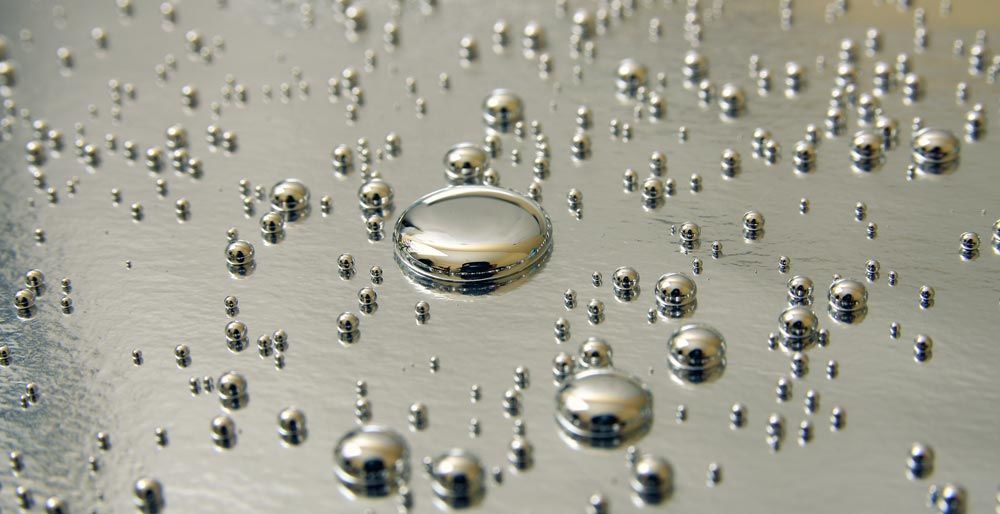
Download the EU Regulation EC 1102/2008 document (PDF)  How beautiful liquid mercury may be, its toxicological aspects make industry handle the metal with great care and professionalism.

The Regulation establishes both permanent and temporary storage of liquid mercury, possible before such storage could be done it requires the development of storage criteria for end-of-life mercury under the Landfill Directive. The Regulation makes it possible to permanently store liquid mercury in underground salt mines or hard rock formation with the same level of safety. This is in line with Euro Chlor's voluntary agreement on the safe storage of excess mercury which was officially recognised by the European Commission.
Download the Commission recommendation document (PDF)

The temporary storage criteria have been proposed by the Commission and are now discussed by the member states. There is little interest for our industry for temporary storage. For Euro Chlor companies it is much more important to have criteria for permanent storage of end-of-life mercury which is no longer used within the chlor-alkali industry. An investigation into the safety of permanent storage of liquid mercury is ongoing in Germany, but these studies may still take several years before being finalised.

Euro Chlor member companies therefore continue to look into other permanent disposal solutions, including stabilized mercury, following closely the developments offered by various suppliers.

Euro Chlor continues implementing a voluntary agreement on phasing out mercury cell technology by 2020. European producers have about 7,600 tonnes of liquid mercury used by 34 electrolysis plants in 15 countries. These units account today for 31 % of European chlorine capacity.

Chlor-alkali metallic mercury reporting to the Commission

According to the Regulation, the quantities of metallic mercury on sites have to be reported yearly to the Commission and the Competent Authorities. Euro Chlor has volunteered to gather the data from the chlor-alkali sites of the Euro Chlor member companies in order to facilitate reporting to the Commission.

Euro Chlor has provided, on behalf of all member companies utilising mercury cell technology, the following data (situation end of 2009 and 2010):

  • best estimate of total amount of mercury still in use in the chlor-alkali cells
  • total amount of metallic mercury stored in the facility.

Download the Total amount of metallic mercury on site 2010 document (PDF).
The data are publicly available on ec.europa.eu.

Documentation

Read more about the safe storage of excess mercury
The Euro Chlor Position Paper (September 2010) (pdf)
Q & A on Safe Permanent Storage of Mercury (September 2010 - PDF)

Read more about other mercury issues covered by Euro Chlor
Chlor-alkali industry's voluntary agreement sufficient to implement mercury cell technology phase out by 2020 (PDF) 
See Mercury emissions documentations below.

Read more about the reduction of global mercury emissions and use in the chlor-alkali industry
UNEP Global Mercury Programme - The Chlor-Alkali Sector Partnership (PDF)

Mercury emissions - Individual plant data

Responsible careIn accordance with the Euro Chlor commitment for openness and transparency on progress in the sustainability programme, you will find here the individual plant data for mercury emissions in the European chlor-alkali sector.
Mercury emissions per site (2010 - PDF)
Trend of the mercury emissions (2010 - PDF)

Archives
2009 - 2008  - 2007 - 2006 - 2005 (PDF documents)

Last update: 03/2012