How is chlorine produced?
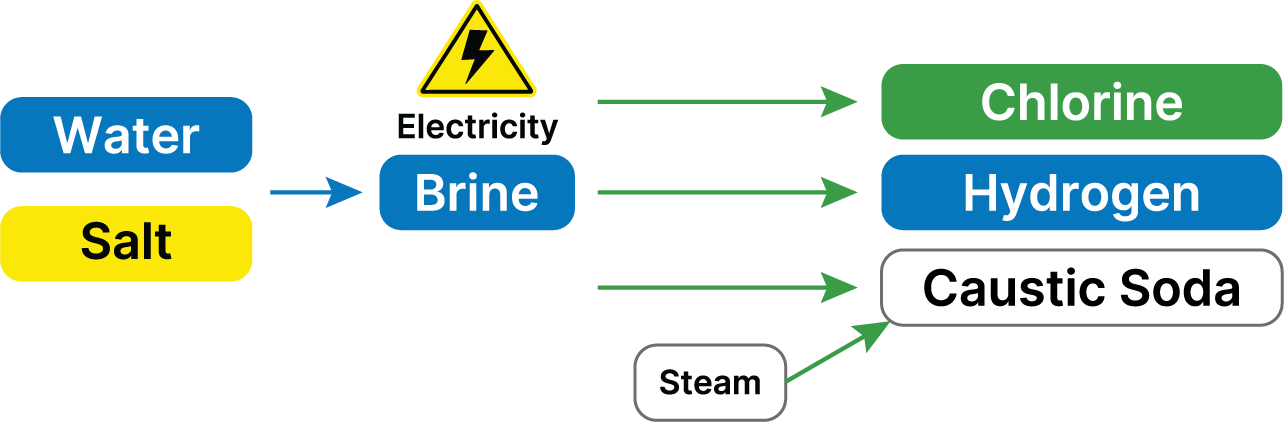
Chlorine is produced by passing an electric current through a solution of brine (common salt dissolved in water). This process is called electrolysis. The chemical term for salt is sodium chloride (NaCl). NEW: produce a bit of chlorine yourself (see below) and download the production process animations
Essential co-products are
caustic soda (sodium hydroxide or NaOH) and
hydrogen (H2). All three are highly
reactive, and technologies have been developed to separate them and
keep them apart. Caustic soda is an alkali and widely-used in many
industries, including the food industry, textile production, soap
and other cleaning agents, water treatment and effluent
control.
See the uses of caustic
soda page
Hydrogen is a combustible
gas used in various processes including the production of hydrogen
peroxide and ammonia as well as the removal of sulphur from
petroleum derivatives.
Based on their sustainability
programmes, more and more companies also use the excess hydrogen in
fuel cells to generate electric
power.
Chlorine has been manufactured industrially
for more than 110 years now.
See the uses of
chlorine page to learn much more about
applications of chlorine.
The three main technologies
of producing chlorine are
Click on the
process names above to visualize the animations
(turn sound on) and download print copies of the
diagrams. The PDF images may be used in scientific or
technical publications if the source www.eurochlor.org is
mentioned.
NEW:
Produce your own chlorine!
A colourful animation shows
you how you can produce (very small quantities) of chlorine
yourself, using only a few everyday tools! Try it out, send us feedback
on how you liked it and win a Euro Chlor prize!
Download the production process
animations
Send us an e-mail and we
will grant you access to downloadable versions of
these chlorine production process animations! Use them in your
classrooms!
Please note: publishing these animations on a website
is allowed if you mention: source www.eurochlor.org.
Please send us a link if you posted the
animations on a website.
Last update: 05/2013